
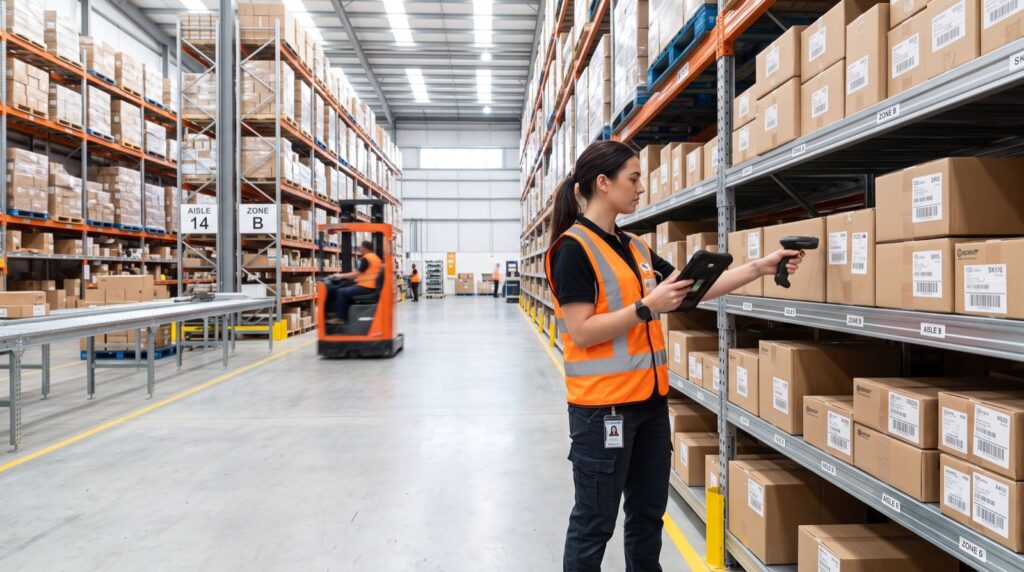
Walk into the back room of almost any successful retail shop and you will see the same picture: cartons stacked to the ceiling, seasonal merchandise wedged behind the staff lockers, and a corridor that has quietly become a storage aisle. Inventory overflow rarely gets a mention in retail playbooks, yet it is one of the most predictable side effects of growth. The better your products sell, the more stock you commit to, and the faster your back room stops coping with the volume passing through it.
Overflow is an operational problem with practical solutions, not a signal that you should slow down purchasing or rush into bigger premises before the numbers justify it. In this guide we will look at why overflow happens even in disciplined businesses, what it genuinely costs you, and how wholesalers and retailers across Saudi Arabia are keeping their sales floors clear while their order volumes keep climbing.
Why Overflow Happens to Well-Run Stores
Overflow is usually blamed on poor planning, but the honest causes are structural. Suppliers reward bulk purchasing with meaningful discounts, so ordering more than you can immediately shelve is often the financially correct decision. Minimum order quantities push in the same direction, and container shipments arrive all at once rather than in tidy weekly batches, which means a single delivery day can bury a stockroom that felt comfortable the day before.
Seasonality multiplies the effect. Retailers preparing for Ramadan, back-to-school weeks, or White Friday campaigns need stock in hand well before demand peaks, because a shelf that empties mid-season represents sales that never come back. The result is a rhythm familiar to every growing store: months of manageable inventory punctuated by weeks where the stock physically outgrows the building.
The Real Cost of Cramming Stock Into Your Shop
The damage from an overstuffed stockroom is easy to underestimate because it arrives in small increments. Cartons crushed at the bottom of a tall stack become write-offs. Staff lose paid minutes every day hunting for items buried three layers deep, and miscounts creep into inventory records because nobody can actually see what is on hand. Blocked walkways create genuine safety liabilities, and inspectors notice them long before you do.
There is also a subtler cost: retail floor space is the most expensive square meterage your business rents. Every rack of reserve stock parked in a corner of the sales area is displacing displays that could be earning. When overflow starts shrinking the shopping experience itself, a stockroom problem has quietly become a revenue problem.
The Lease Trap: Why a Full Warehouse Is Usually the Wrong First Move
The instinctive fix is to rent a warehouse, and for large operations that eventually makes sense. For most growing retailers, though, a traditional lease solves one problem by creating five more. You commit to a year or more of rent sized for your busiest month, then pay for empty space the rest of the year. You inherit responsibility for security, electricity, pest control, and maintenance, and you may need to hire somebody simply to manage the site.
A more proportionate option is to use purpose-built commercial facilities that offer Storage for Wholesalers and Retailers on flexible terms. Instead of leasing a building, you rent exactly the space your current stock requires, scale it up ahead of peak buying season, and scale it back down afterwards. Security, climate management, and upkeep are the provider’s responsibility, which keeps your payroll and your risk exactly where they were.
Matching Storage to Your Stock Calendar
Flexible storage delivers the most value when it is tied to a written stock calendar rather than used as an emergency valve. Map your year honestly: when do containers land, when do seasonal campaigns begin, and when do suppliers offer their deepest bulk pricing? With those dates on paper, you can book additional space a few weeks ahead of each surge instead of scrambling once the corridor is already impassable.
A useful pattern is to treat off-site storage as the buffer between the port and the shelf. New shipments go straight into storage, and the shop pulls replenishment in van-sized batches two or three times a week. The sales floor stays presentable, counts stay accurate, and a delayed container no longer forces a panicked reshuffle of the entire back room.
How to Vet a Storage Partner
Not all facilities are equal, and the cheapest quote is rarely the full story. The due-diligence mindset is the same one we described when discussing how to identify quality service providers for other parts of your business: verify capability before comparing price. Ask how access works outside office hours, because retail replenishment does not keep a nine-to-five schedule. Ask what surveillance and entry controls protect the units, whether the environment is managed against heat and humidity, and how goods are documented on the way in and out.
It is also worth asking about handling support. A partner that can receive a supplier delivery on your behalf, or help load a vehicle when your driver arrives, effectively extends your team without extending your payroll. Small operational courtesies like these are what separate a storage landlord from a storage partner.
When Overflow Meets Opportunity: Pop-Ups, Bazaars, and Trade Shows
Growing retailers increasingly sell beyond their own four walls, taking stands at seasonal bazaars, shopping festivals, and trade exhibitions. These appearances create a second inventory stream: display fixtures, branded counters, banners, and the merchandise reserved for the event itself. Storing that equipment in the shop between shows recreates the very overflow you just worked to solve.
Specialised Storage for Event & Exhibition services exist for precisely this situation. Fixtures and event stock live off-site in ready-to-move condition, get collected on the way to the venue, and return to storage when the event closes. Your shop remains a shop, and your event kit stays organised enough that you can say yes to the next opportunity at short notice.
Key Takeaways
- Inventory overflow is a normal by-product of growth, bulk pricing, and seasonal buying, not simply a sign of poor planning.
- Overstuffed stockrooms quietly cost money through damaged goods, lost staff time, inaccurate counts, and shrinking sales space.
- A traditional warehouse lease locks in fixed costs; flexible commercial storage scales with your actual stock levels month by month.
- Tie storage bookings to a written stock calendar and use off-site space as a buffer between shipments and shelves.
- Vet providers on access hours, security, environment, and handling support, not just on the monthly rate.
- Event and exhibition inventory deserves its own storage plan so pop-up opportunities never clutter the store again.
Final Thoughts
Overflow is one of the better problems a retailer can have, because it means buying power and sales volume are both moving in the right direction. The mistake is treating it as background noise until a crushed pallet, a failed inspection, or a chaotic peak season forces the issue. A few hours spent mapping your stock calendar and pricing flexible storage will almost always cost less than one season of overflow-related losses.
Start small: move one category of slow-turning or seasonal stock off-site, measure the effect on your back room and your team’s working day, and expand from there. Retailers who make storage a deliberate part of their operating model, rather than an afterthought, consistently find that the next stage of growth arrives with far less friction than the last one did.